School Gate Screening: Setting Up Metal Detectors and Bag Checks
2026-09-21 · 6 min read
A school gate is a checkpoint with two daily peaks and a lot of young people moving through it fast. Setting up metal detectors and bag checks there is less about the equipment alone and more about layout, staffing, and a process that keeps the line moving while treating students respectfully. This guide covers the operational side of school gate security — how to lay out the gate, split walk-through and handheld screening, staff the peak, and communicate the policy to families. For the compliance angle, see our separate school entrance security compliance guide.
Key takeaways
- Design the gate layout around arrival and dismissal peaks, not an average hour.
- Use a walk-through arch for volume and a handheld wand for secondary checks.
- Assign each guard a single role during the peak so no step is missed.
- Screen students respectfully — tone and privacy matter as much as detection.
- Log the exceptions and review them monthly to spot real patterns.
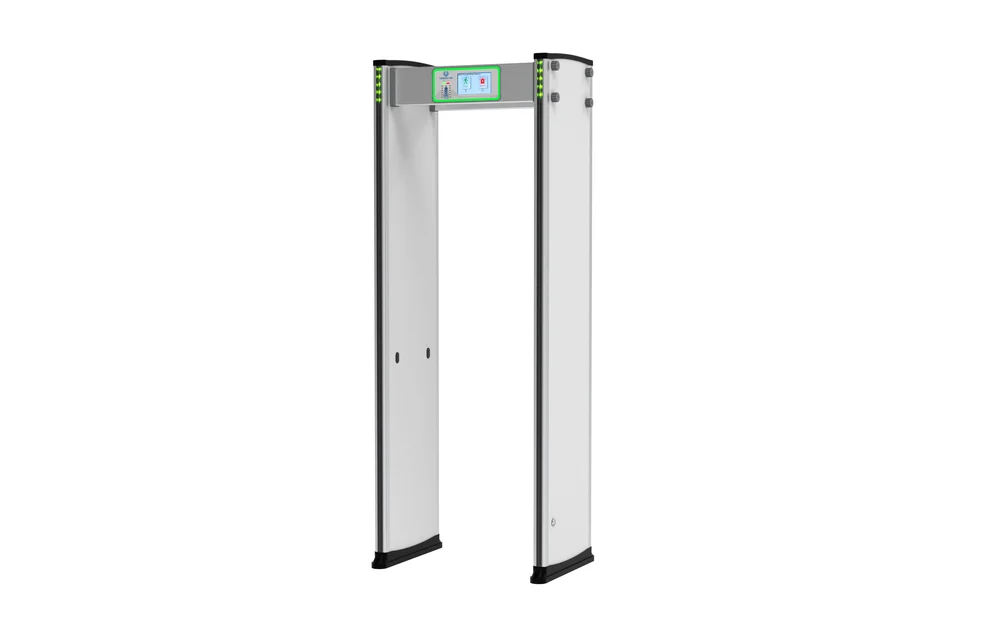
Planning the gate layout for arrival and dismissal peaks
A school gate is not a steady-state checkpoint. It absorbs a large share of the day’s arrivals in a short morning window and does the same in reverse at dismissal, then sits quiet for the rest of the day. Layout has to be designed around those two peaks, not around an average hour.
A workable layout separates three flows: students, parents and visitors, and vehicles. Give the student lane the most width because it carries the most people, place the walk-through metal detector at the front of that lane with a bag-check table beside it, and keep a separate, narrower visitor lane where adults can be logged and screened without mixing into the student rush. The dismissal peak runs the same layout in reverse, so mark the lanes clearly in both directions.
Choosing between walk-through and handheld screening
Walk-through and handheld detectors do different jobs at a school gate. The arch handles volume — every student walks through and only those who alarm are pulled aside. A handheld metal detector is the secondary tool, used to pinpoint what triggered the arch without having to ask a student to empty every pocket in front of their peers.
For a smaller gate or a budget-constrained start, handheld screening alone is workable but slower and more dependent on guard technique. Most schools that can fit an arch end up with one for the student lane and a wand for secondary checks, with a second wand held in reserve. The choice should follow your peak headcount and the width of the gate, not a one-size-fits-all rule.
Staffing, roles and guard training
A gate checkpoint needs clear roles, not a cluster of guards all doing the same thing. Assign each person a single job during the peak so the line keeps moving and no step is missed. The table below is a starting split; adjust the headcount to your gate size.
| Role | Responsibility |
|---|---|
| Gate supervisor | Owns the checkpoint, sets the pace, and decides on escalation |
| Arch operator | Watches the walk-through detector and flags alarms for secondary check |
| Wand guard | Performs handheld secondary check on anyone who alarms the arch |
| Bag check guard | Inspects bags, lunchboxes, and packages at the table |
| Floater | Manages the queue, guides students, and relieves guards on breaks |
Training should cover wand technique, how to read the arch’s zone display, and the school’s escalation path for a prohibited item. Run a short drill before the school year starts and refresh it after any long break, when guards and students are both out of routine.
Handling students, parents and visitors respectfully
School screening is unusual because the people being screened are mostly children, and the checkpoint is visible to parents every morning. Tone matters as much as detection. Guards should explain what they are doing, avoid singling students out in front of crowds, and move secondary checks to a semi-private spot beside the gate rather than the middle of the lane.
Visitors and parents follow a different flow. Log them at the visitor lane, screen bags at the table, and issue whatever visitor pass the school already uses. A consistent, polite process at the gate sets the tone for the whole campus — see the schools and universities approach for how this fits into a broader campus plan.
Communicating the policy to the school community
A gate screening program runs far more smoothly when families know what to expect before they arrive. Send a short note at the start of the year explaining what students should leave at home (large metal items, prohibited objects), what the arch does, and what happens if it alarms. Keep the language plain and friendly — the goal is cooperation, not anxiety.
Repeat the reminder after long breaks and before large events when the gate sees unusual volume. A community that understands the checkpoint arrives earlier, carries less metal, and keeps the line moving — which is the real objective of the whole setup.
Logging, escalation and review
Keep a simple gate log: time, what was flagged, what action was taken, and who handled it. You do not need a record of every student who walked through cleanly — you need a record of the exceptions, so patterns (a recurring item, a busy lane, a guard who needs refresher training) show up over weeks rather than being lost in the morning rush.
Define the escalation path before the first day: what a guard does with a prohibited item, who they call, and how parents are involved. Review the log monthly with the school’s administration and adjust staffing or layout based on what actually happened at the gate, not on assumptions.
Frequently asked questions
Do we need a walk-through detector, or are handheld wands enough?
It depends on your peak headcount and gate width. A walk-through arch handles volume best because every student passes through and only alarms are pulled aside. Handheld wands alone work for smaller gates but are slower and more dependent on guard technique. Many schools use an arch for the student lane and a wand for secondary checks.
How do we screen students without embarrassing them?
Explain what the arch does, avoid singling students out in front of the crowd, and move secondary checks to a semi-private spot beside the gate. A calm, consistent tone from guards — plus a start-of-year note to families — keeps the checkpoint cooperative rather than intimidating.
What should we log at the gate?
Log the exceptions, not every clean pass: the time, what was flagged, the action taken, and who handled it. Reviewing that log monthly with the school administration surfaces patterns — a recurring item, a slow lane, or a guard who needs refresher training — that would otherwise be lost in the morning rush.
Getting started
If you are setting up a school gate checkpoint or rethinking an existing one, our team can help you size the arch, plan the lanes, and train the guard team.