X-Ray Baggage Scanner Buyer’s Guide: Commercial and Industrial Sites
2026-09-21 · 6 min read
An X-ray baggage scanner is the part of an entrance checkpoint that sees inside bags without slowing the line to open them. But choosing one for a commercial or industrial site is not just about picking the most powerful unit — tunnel size, image quality, operator training, throughput, and the physical space the machine needs all decide whether the scanner actually helps your guards or just takes up floor space. This buyer’s guide covers the choices that matter for baggage scanner for malls and offices and X-ray inspection machine deployments in the Philippines.
Key takeaways
- Tunnel size is the most important decision — match it to the largest bag people actually carry, with margin.
- A scanner is an inspection aid, not an alarm; operator training matters as much as the machine.
- Throughput depends on belt speed, conveyor length, and how fast operators clear each image.
- Radiation safety is built in, but still depends on following manufacturer and local procedures.
- Confirm maintenance support and spare-parts lead time before you buy, not after.
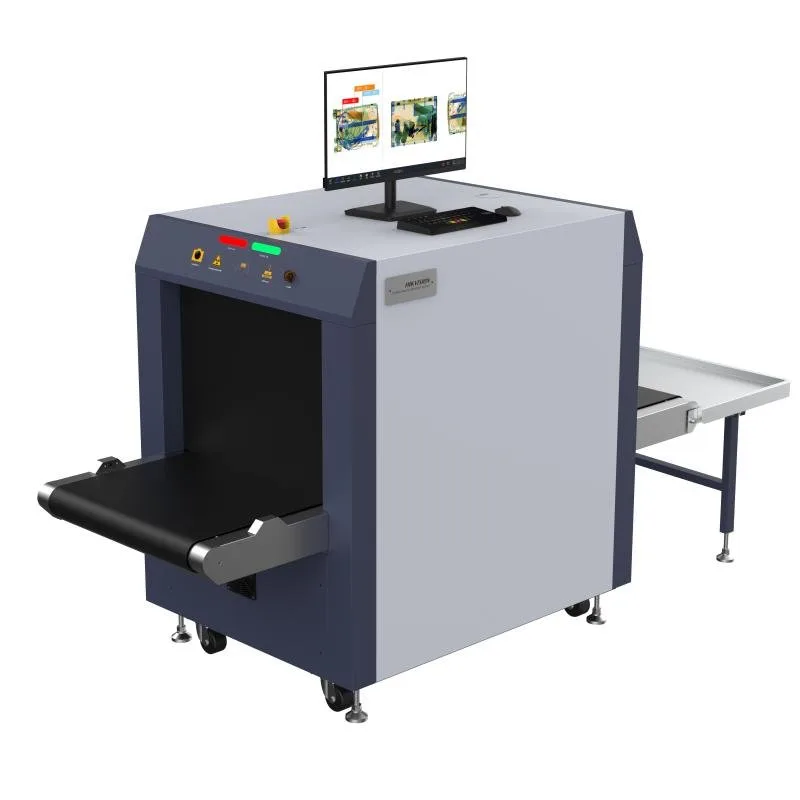
What an X-ray baggage scanner does and does not detect
An X-ray baggage scanner shows operators what is inside a bag without opening it. The conveyor carries the item through a lead-lined tunnel, an X-ray source passes through it, and detectors on the other side build an image that an operator reads on a screen. Dense objects, metal components, and organic and inorganic materials show up with different shading or colour coding, depending on the unit.
What a scanner does not do is make a judgement on its own. It is an inspection aid, not an alarm. The operator decides whether something looks wrong, asks for a bag to be opened, or clears it through. That is why operator training matters as much as the machine — a powerful scanner with an untrained operator is a weaker checkpoint than a modest scanner with a sharp one.
Matching tunnel size to what people actually carry
Tunnel size — the dimensions of the opening the bag passes through — is the single most important buying decision. A tunnel that is too small forces guards to turn large bags away, open them manually, or run them through sideways, all of which slow the entrance and create gaps. A tunnel that is far larger than you need costs more, takes more floor space, and exposes the operator to a bigger image than necessary.
The practical approach is to look at what people actually carry through your entrance. An office lobby sees backpacks and laptop bags; a mall entrance sees shopping bags, strollers, and oversized parcels; an industrial gate may see toolboxes and large delivery boxes. Pick a tunnel that comfortably fits the largest common item with a little margin, then confirm the choice against the X-ray baggage scanner options available for that size range.
Image quality, operator screens and training
Image quality shows up in specifications like steel penetration (how thick a layer of steel the X-ray can see through) and wire resolution (how fine a wire it can distinguish). Higher numbers mean a clearer picture of densely packed or shielded contents. Many units also offer material classification — colour coding that separates organic, inorganic, and metal items — which helps operators spot anomalies faster.
The operator screen is where the work actually happens. A single monitor is standard; a dual monitor setup lets one operator review a suspicious image while the conveyor keeps moving. Screen height and tilt matter for long shifts, and a keyboard with image tools (zoom, edge enhance, reverse) should be within easy reach. Budget for training as part of the purchase, not as an afterthought — operators need supervised practice on real bags before they screen alone.
Throughput and where to place the unit
Scanner throughput depends on belt speed, conveyor length, and how quickly operators clear each image. As a rule, the conveyor should be long enough that the next bag is loaded while the current one is still being reviewed, so the operator always has an image ready. At a busy entrance, pair the scanner with a walk-through metal detector so people and bags move in parallel rather than queuing behind one machine.
Placement is a layout decision. The scanner needs a loading area, room for the conveyor, an operator station with a clear view of both the screen and the people handing over bags, and an exit lane for cleared items. Avoid corners where bags pile up, and keep the operator screen angled away from the public so images are not visible to passers-by.
Space, power, radiation-safety practices and maintenance
X-ray scanners need a dedicated mains supply, stable floor space, and enough ventilation for continuous operation. Radiation safety is built into the design — lead-lined curtains at the tunnel openings, interlocks that cut the X-ray beam if a panel is opened, and external signage — but safe operation still depends on following the manufacturer’s procedures and any applicable local requirements. We are deliberately generic here: confirm the current radiation-safety rules and inspection schedule that apply to your site and jurisdiction rather than assuming a fixed standard.
Maintenance keeps the image trustworthy over time. Routine checks of the conveyor, curtains, and interlocks, plus periodic image-quality verification, should be logged. Before buying, confirm what support and spare-parts lead time the supplier offers, especially for malls and retail or corporate facilities sites where downtime during peak hours is costly.
Buyer’s checklist
Use this checklist when comparing X-ray baggage scanner options. Confirm each item against your actual entrance and the bags people carry through it.
| Consideration | What to confirm |
|---|---|
| Tunnel size | Match the opening to the largest bag or parcel people actually carry |
| Image quality | Penetration, wire resolution, and colour or organic/inorganic display modes |
| Operator screens | Single or dual monitor; tilt and height for long shifts |
| Throughput | Belt speed and conveyor length sized to your peak window |
| Power and environment | Mains requirement, ventilation, and ambient temperature range |
| Radiation safety | Lead-lined curtains, interlocks, and signage per manufacturer and local rules |
| Maintenance | Routine checks, available support, and spare parts lead time |
Frequently asked questions
How do I know which tunnel size to choose?
Look at the largest bags and parcels people actually carry through your entrance, then add a little margin. An office lobby typically needs a smaller tunnel than a mall entrance or an industrial gate that sees toolboxes and delivery boxes. Choosing from the available X-ray baggage scanner options is easier once you have that real-world measurement.
Does a higher steel-penetration number always mean a better scanner?
Not necessarily. Higher penetration helps with densely packed or shielded bags, but it matters most at entrances that see large or metal-heavy items. For a typical office or retail entrance, image clarity, operator training, and a tunnel that fits the bags usually matter more than the maximum penetration figure.
Is an X-ray scanner safe to operate near the public?
Modern scanners are designed with lead-lined curtains, beam interlocks, and external signage to keep radiation within the tunnel. Safe operation still depends on following the manufacturer’s procedures and any applicable local radiation-safety rules. Confirm the current inspection and signage requirements for your site rather than assuming a fixed standard.
Getting started
If you are sizing an X-ray scanner for a new entrance or replacing an older unit, our team can help you match tunnel size and image features to the bags your site actually sees.